Source Injector Slide Valve for Auto, Industrial, Motorcycle
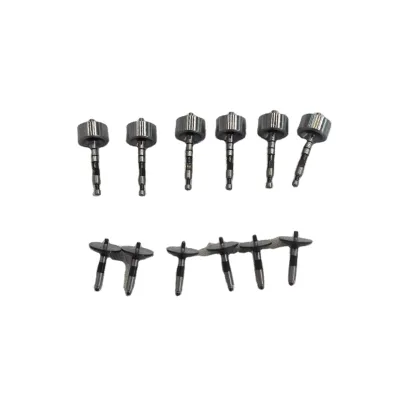
Find and compare 30 injector slide valve options from verified Chinese manufacturers. Buyers can evaluate specifications, certifications, and pricing for diesel fuel systems in automotive, industrial, and motorcycle applications.
Key considerations
Products List




Comprehensive Sourcing Guide
Strategic Sourcing Guide for Injector Slide Valve Components
Understanding Technical Specifications and Component Variants
When sourcing components described under the core keyword of injector slide valve, buyers must first recognize that the market often lists related precision spring assemblies and fuel system hardware rather than a single monolithic valve unit. The technical landscape for these components is defined by specific material properties, geometric tolerances, and functional roles within high-pressure fuel systems. A critical observation in the current supply data indicates that products often labeled with similar functional names, such as "Fuel Injector Spring" or "Bypass Valve Spring," share a common lineage with slide valve mechanisms in diesel and automotive applications. These components are frequently engineered as compression springs designed to operate within multi-cylinder engine environments, ensuring precise actuation of the fuel injection timing.
The material composition is a primary differentiator in performance. The supply data highlights two distinct material categories: high-grade Steel and specialized Alloy. Steel variants are typically associated with standard industrial and automotive applications, while Alloy materials suggest a need for enhanced resistance to fatigue or extreme thermal conditions found in heavy-duty machinery. The production process for these components is predominantly Cold Roll, a method that ensures high tensile strength and dimensional consistency. This manufacturing technique is essential for maintaining the integrity of the spring rate, which is critical for the rapid opening and closing cycles required in fuel injection systems.
Geometric specifications are equally vital. The wire range for these components spans from a minimum of 0.1mm (0.004 inch) to a maximum of 12mm (0.48 inch), allowing for a vast array of custom configurations. The winding direction is often customizable, with specific listings noting "Left Winding" as a standard option, though buyers should verify if right-winding or bi-directional capabilities are available for their specific engine architecture. The end type is typically "Close and Ground Flat" or "Close and Ground," a finish that ensures stable seating and uniform load distribution during the compression phase. These physical attributes directly influence the component's ability to function as a buffer or pressurized element within the injector assembly.
Compliance, Certification, and Regulatory Standards
Navigating the regulatory landscape for fuel system components requires rigorous verification of certifications and adherence to international standards. The supply chain for these parts is heavily regulated due to the safety implications of fuel injection systems. Buyers should prioritize suppliers who can demonstrate compliance with ISO9001, a standard for quality management systems that ensures consistent manufacturing processes. Furthermore, the presence of SGS and RoHS certifications indicates that the materials used are free from hazardous substances and have undergone third-party verification for quality and safety.
Specific to the automotive industry, the Ts16949 (now IATF 16949) certification is a critical benchmark. This standard is specifically designed for automotive production and relevant service parts, ensuring that the supplier has robust processes for defect prevention and variation reduction. The CE marking, while noted in the data with varying confidence levels, suggests compliance with European Union safety, health, and environmental protection requirements. However, buyers must treat this as a claim to be verified rather than an automatic guarantee, as certification status can vary by batch or specific product line.
Material standards are another pillar of compliance. The data references GB 4357-09, a Chinese national standard for steel wire, or equivalent international standards. This standard governs the chemical composition and mechanical properties of the steel used in spring manufacturing. For buyers operating in regions with strict import regulations, verifying that the material standard matches local requirements is essential. Additionally, the tolerance levels are specified as "GB Standard, Grade II" or customizable to the buyer's requirement. This implies that while a baseline of quality exists, the final acceptance criteria for the injector slide valve components should be negotiated based on the specific engine manufacturer's specifications. The AQL (Acceptable Quality Level) of 1.0 is a statistical measure used to determine the maximum number of defective items allowed in a sample, indicating a high standard of quality control where only 1% of the sample can be defective.
Cost Drivers and Pricing Dynamics
The pricing structure for injector slide valve components and related spring assemblies is influenced by a complex interplay of material costs, customization levels, and order volume. The observed price range in the market spans from $0.05 to $1,000 USD, a wide disparity that reflects the diversity of product complexity. The lower end of this spectrum typically corresponds to standard, off-the-shelf compression springs with minimal customization, such as standard wire diameters and generic winding directions. In contrast, the higher price points are associated with specialized alloy materials, complex custom geometries, and components requiring tight tolerance controls or specific surface treatments.
Material selection is a primary cost driver. Alloy materials generally command a premium over standard steel due to their superior mechanical properties and higher raw material costs. Similarly, the production process, specifically the Cold Roll method, adds value but also cost compared to simpler manufacturing techniques. The surface treatment, which can range from standard oiling to specific coatings with thicknesses of 8 to 10 micrometers, also impacts the final price. Buyers should note that the "Rusted Oil" treatment mentioned in some listings is a specific finish that may be cheaper than advanced corrosion-resistant coatings but requires careful consideration regarding long-term durability.
Order volume plays a significant role in pricing, as indicated by the Minimum Order Quantity (MOQ) range of 1 to 10,000 units. Suppliers often offer tiered pricing structures where the unit cost decreases significantly as the order volume increases. For small-batch prototyping or low-volume production, buyers may face higher per-unit costs, whereas large-scale industrial procurement can leverage economies of scale. The business model of "Factory OEM" suggests that direct engagement with the manufacturing facility can reduce intermediary markups, potentially lowering costs for buyers willing to commit to larger volumes. However, the lead time, which can range from 7 to 15 days for standard orders, must be factored into the total cost of ownership, as expedited shipping or rush production often incurs additional fees.
Typical Applications and Industry Sectors
The versatility of injector slide valve components and their associated spring assemblies allows them to serve a broad spectrum of industrial sectors. The primary application domain is the automotive industry, where these components are integral to the fuel injection systems of diesel engines. The data explicitly lists "Auto" and "Motorcycle" as key usage areas, indicating that these parts are designed to withstand the high-frequency cycling and vibration inherent in vehicle engines. In these applications, the component functions as a critical buffer or pressurized element, ensuring that the fuel injector opens and closes at the precise moment required for optimal combustion efficiency.
Beyond personal and commercial vehicles, the industrial sector is a major consumer of these components. Heavy machinery, construction equipment, and stationary power generators often rely on diesel engines that utilize similar fuel injection mechanisms. The "Industrial" usage tag in the product data confirms that these parts are engineered for durability in demanding environments. The "Multi-cylinder" specification suggests that these components are suitable for engines with multiple combustion chambers, which are common in both automotive and industrial power units.
The home appliance sector is another emerging application area. While less common than automotive use, certain high-end or specialized home appliances that utilize internal combustion engines may incorporate these components. The "Home Appliance" tag in the data points to this potential, though the specific requirements for such applications may differ from automotive standards, often focusing on noise reduction and longevity rather than high-performance output. The "Long Working Life" advantage noted in the product descriptions is particularly relevant for these sectors, where maintenance intervals are often extended to minimize downtime.
Supplier Evaluation and Business Model Assessment
Selecting the right supplier for injector slide valve components requires a thorough evaluation of their business model, production capabilities, and quality assurance systems. The data indicates that the prevailing business model is "Factory OEM" or "Factory OEM Service," which implies that the supplier is a direct manufacturer capable of producing custom designs for original equipment manufacturers. This model is generally preferable for buyers seeking customization, as it allows for direct communication with the engineering team and greater control over the production process.
When evaluating potential suppliers, buyers should verify the "Business Mode" to ensure it aligns with their procurement strategy. A factory-direct model often offers better pricing and more flexibility for custom orders compared to trading companies. However, buyers must also assess the supplier's capacity to handle their specific volume requirements, given the wide range of MOQs observed in the market. The ability to produce "as Per Your Request" regarding winding direction, surface treatment, and end type is a key indicator of a supplier's flexibility and technical capability.
Quality control is another critical factor in supplier evaluation. The presence of an AQL 1.0 standard and "Random Sample Inspection" as a testing method suggests a commitment to quality, but buyers should request detailed quality reports and audit the supplier's testing facilities. The "Testing Method" of random sample inspection is standard, but for critical fuel system components, buyers may require 100% inspection or more rigorous statistical process control. Additionally, the supplier's location, primarily noted as "China" with specific mentions of "Wenzhou," should be considered in the context of logistics, lead times, and geopolitical risks. Wenzhou is a known manufacturing hub, but buyers should verify the specific factory location to ensure it matches the claimed capabilities.
Quality Control and Long-Term Procurement Considerations
Ensuring the long-term reliability of injector slide valve components requires a robust quality control framework that extends beyond the initial purchase. The data highlights several key quality parameters that buyers should monitor, including the "Spring Rate Tolerance" of +/-3% to 10% and the "Tolerance" levels based on GB Standard Grade II. These tolerances define the acceptable deviation in the component's mechanical properties, which directly affects the performance of the fuel injection system. Buyers should establish clear acceptance criteria for these tolerances in their purchase orders to prevent the receipt of out-of-spec components.
Packaging is another often-overlooked aspect of quality control. The data mentions various packaging methods, including "Carton Box," "Box / Carton," "OPP Bags with Blank Carton," and "Carton and Outer Wooden Case." The choice of packaging depends on the shipping distance and the fragility of the components. For international shipments, the use of outer wooden cases is recommended to prevent damage during transit. The "Normal Carton Size" of 23x23x31 cm is a standard dimension that buyers should be aware of for logistics planning and storage optimization.
Long-term procurement considerations also include the supplier's ability to maintain consistency over time. The "Advantage" of "Long Working Life" is a claim that must be validated through field testing and historical performance data. Buyers should request case studies or references from other clients in similar industries to verify these claims. Additionally, the "Lead Time" of 7-15 days is a critical factor for supply chain planning. Buyers should negotiate lead times that align with their production schedules and consider the impact of potential delays on their operations.
Finally, buyers should consider the environmental and sustainability aspects of their procurement. The RoHS certification indicates compliance with restrictions on hazardous substances, which is increasingly important for global supply chains. As regulations tighten, suppliers who can demonstrate a commitment to sustainable manufacturing practices will be better positioned to meet future requirements. By focusing on these quality control and long-term considerations, buyers can ensure a reliable supply of high-performance injector slide valve components that meet their specific technical and operational needs.
FAQs
What certifications do injector slide valve springs typically hold?
These components typically hold ISO9001, SGS, RoHS, CE, and Ts16949 certifications. Buyers should verify that the specific batch matches these standards, as certification status can vary by product line or manufacturing facility.
Which materials are used for fuel injector springs?
Manufacturers primarily use high-grade Steel or specialized Alloy for these springs. Steel variants suit standard industrial applications, while Alloy materials are selected for enhanced resistance to fatigue and extreme thermal conditions in heavy-duty machinery.
Can buyers request custom winding directions for these springs?
Yes, buyers can request custom winding directions, including left winding or other configurations. Suppliers often produce these components as per your specific request to ensure compatibility with unique engine architectures and injector assembly requirements.
What is the typical lead time for ordering these components?
The typical delivery time ranges from 7 to 15 days for standard orders. Expedited shipping or rush production may incur additional fees, so buyers should factor this lead time into their total cost of ownership and production planning.
How are these springs packaged for industrial shipping?
Components are commonly packed in OPP bags within blank cartons, sometimes with an outer wooden case. Specific packaging dimensions vary, such as 23x23x31 cm cartons, ensuring safe transport while maintaining the integrity of the precision spring assemblies.
What tolerance standards apply to these fuel system springs?
Tolerances generally follow GB Standard Grade II or can be customized to your requirement. This ensures dimensional consistency for the spring rate, which is critical for the rapid opening and closing cycles required in high-pressure fuel injection systems.